English | Français

Sylvain Charlat portrait

Sylvain Charlat

Email : sylvain.charlat@cnrs.fr & sylvain.charlat@gmail.com

CNRS (UMR 9192)
Laboratoire PIMIT (Processus Infectieux en Milieu Insulaire Tropical)
Plateforme CYROI, 2, rue Maxime Rivière,
97490 Sainte Clotilde, La Réunion, France

https://umr-pimit.fr/membre/sylvain-charlat/

https://scharlat.github.io/


Who are I? Who am we?

These enigmatic questions, borrowed from my colleague and friend Fabrice Vavre, run through most of my work.

As opportunities of collaborations arose, these questionings gave rise to various research projects that are briefly described below. Symbiotic relationships, approached in particular through evolutionary genomics in arthropods, occupy a prominent place, alongside modeling, didactics, and more recently, epistemology.

To discuss these topics, or to learn about possible opportunities to join us, please feel free to contact me.

AS IT COMES...

RESEARCH THEMES

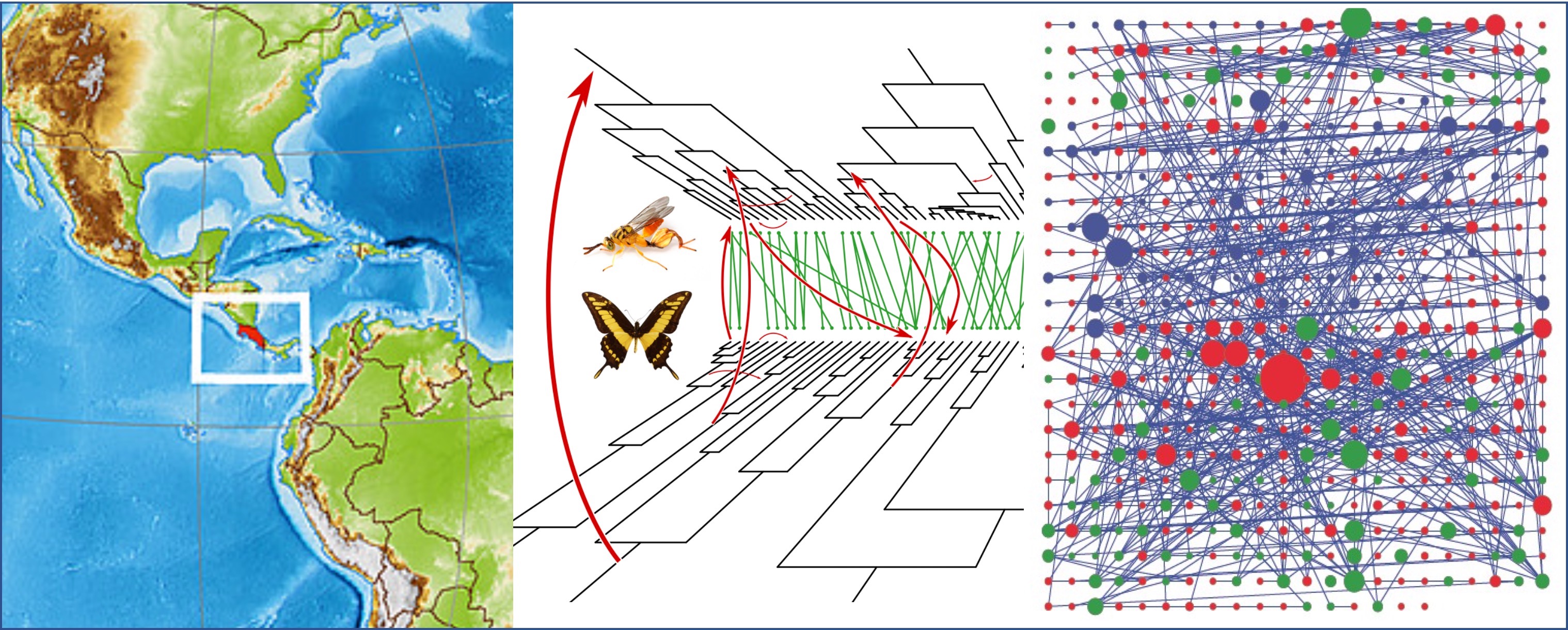
We seek to test the hypothesis that parasitoids, particularly via domesticated viruses, would constitute preponderant vectors of horizontal transfers.

Horizon project illustration

The Horizon project is based on the genomic analysis of numerous species of Lepidoptera and their parasitoids, in an ecological network documented through long term ecological research in Costa Rica.


For more details:

Of all symbiotic lineages of bacteria, Wolbachia is probably both the most abundant and the most diverse in terms of evolutionary implications. Its vertical maternal transmission has led it to evolve very particular invasion strategies, often beneficial to females (and more precisely, to the cytoplasmic lineage, transmitted by females) and on the contrary deleterious to males.

Wolbachia has always been central to our work, especially concerning its epidemiological dynamics and evolutionary consequences, at the scale of arthropod communities, and the genetic architecture of cytoplasmic incompatibility.

Wolbachia illustration

The evolutionary dynamics of Wolbachia are addressed through cophylogenetic approaches, and the genetic architecture of cytoplasmic incompatibility is studied by combining phenotypic and genomic information.


For more details:

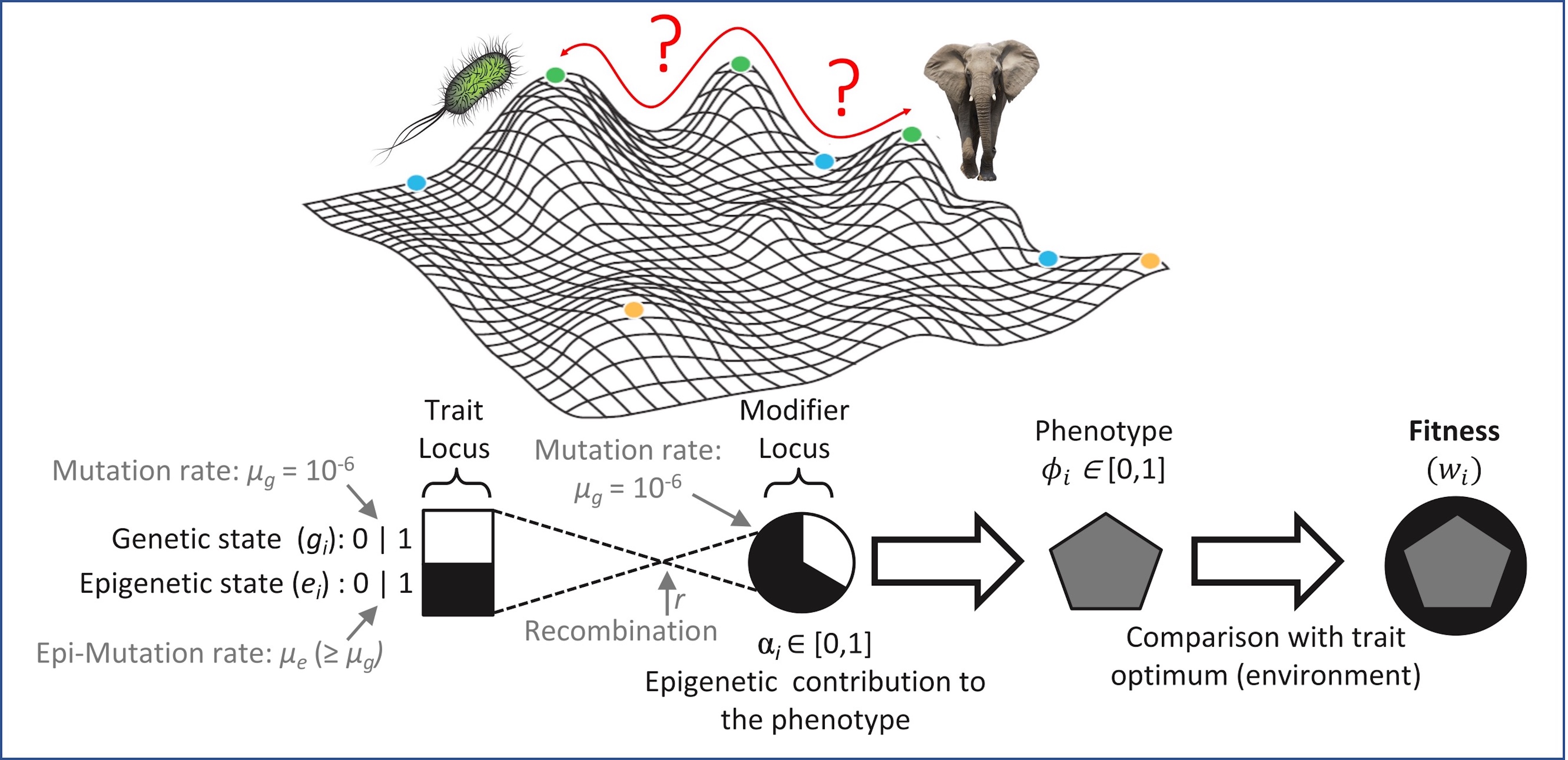
As powerful as DNA variations may be in explaining evolution, what might be the contribution of other modes of inheritance to adaptive evolution?

Non-genetic inheritance illustration

We address this question through theoretical models, aiming in particular to understand the evolutionary implications of the high frequency of "epi-mutations".


For more details:

The teaching of evolutionary biology is reputed to be difficult. Beyond ideological reasons, this reveals how hard (but important) it is to deal with uncertainty in science teaching, and science in general.


For more details:

If, in an evolutionary perspective, the individual is recursively conceived as resulting from the merging of individuals of lower scale, how did the smallest scale, the first, come to be?

What were the first units of selection, the first sparks of life? How to define and describe their properties, which necessarily implies combining biological and physico-chemical concepts? Where does individuality begin, and with it evolution by natural selection? In the uncertain hypothesis that such units of selection could exist outside the living world, in other physico-chemical systems, how to recognize them?


For more details: